
The Responsibility of Peace
Each November, we gather to remember those who served, those who died, and the countless lives forever changed by war. But remembrance is more than looking back. It also asks us to consider what history is calling us to do today.
As Canada and other nations prepare for the possibility of future conflict, we face a profound ethical tension: how do we prepare to defend human life and freedom while remaining committed to preventing war?
This Remembrance Day, we will reflect on the human cost of conflict, the moral complexities of military service, and our shared responsibility to build a more peaceful world.
Through remembrance, reflection, and the traditional sounding of the Last Post and Reveille, we will consider how honouring the past can inspire our commitment to the future.
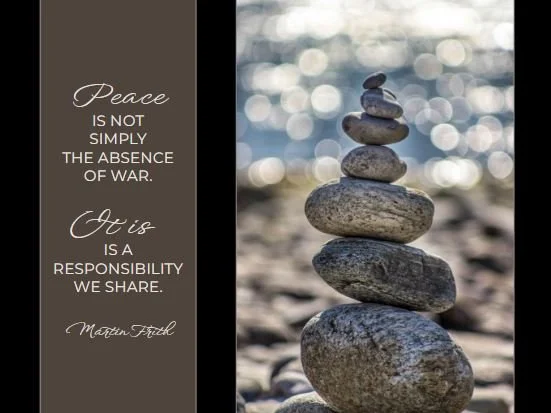
Peace is not simply the absence of war. It is a responsibility we share.
Please join us this Sunday as Martin welcomes Humanist Military Chaplain Anne Marie Tapp and trumpeter George McCormick to share a meaningful time with us in the hall as we honour Remembrance Day.
Coming soon… Watch the gathering here.
READING
The preamble to UNESCO’s founding constitution offers a profound understanding of peace. Its central argument is powerful: peace is not simply the absence of war. It must be built upon human dignity, mutual understanding, education, and our shared responsibility to one another.
It connects beautifully with West Hill’s values, particularly Growing in Wisdom.
From the Preamble to the Constitution of UNESCO (1945)
Abridged and adapted for inclusive language
Since wars begin in the minds of people, it is in the minds of people that the defences of peace must be constructed;
That ignorance of each other’s ways and lives has been a common cause of that suspicion and mistrust between the peoples of the world through which their differences have all too often broken into war;
That the great and terrible war which has now ended was a war made possible by the denial of the democratic principles of the dignity, equality and mutual respect of all people, and by the propagation, through ignorance and prejudice, of the doctrine of the inequality of people and races;
That the wide diffusion of culture, and the education of humanity for justice and liberty and peace are indispensable to human dignity;
That a peace based exclusively upon the political and economic arrangements of governments would not be a peace which could secure the lasting and sincere support of the peoples of the world;
Peace must therefore be founded upon the intellectual and moral solidarity of humanity.
Believing in full and equal opportunities for education for all, in the unrestricted pursuit of objective truth, and in the free exchange of ideas and knowledge, we are determined to develop the means of communication between peoples for the purposes of mutual understanding and a truer and more perfect knowledge of each other’s lives.