
Love & Be Loved - Why: Part 2
It is estimated that over 100 million songs have been recorded on the topic of love. Movies of all genres from romance to thriller can feature love, even if just in their sideplots, and when it comes to books, one website identified the number as “countless”.
Love is studied academically in science, psychology, psychiatry, anthropology, sociology, literature, theology, and philosophy, yet it’s still not easy to define, and even harder put into practice.
This Sunday, SCott Kearns takes the mic to share his Perspective(s) in our series about “love” asks the question “Why?” To find some answers to that, we’ll first look at the “what?” and then see what kind of “therefore” might follow.
We’d love to see you there. Love to.
Watch the gathering here
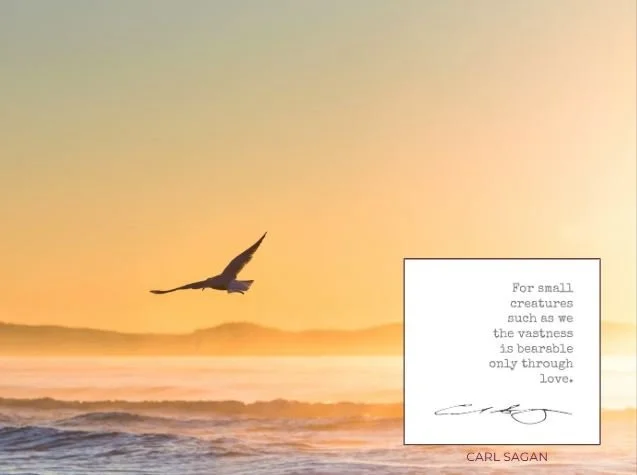
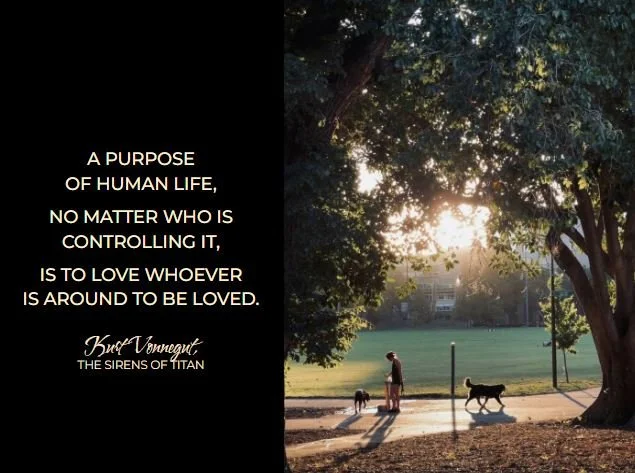
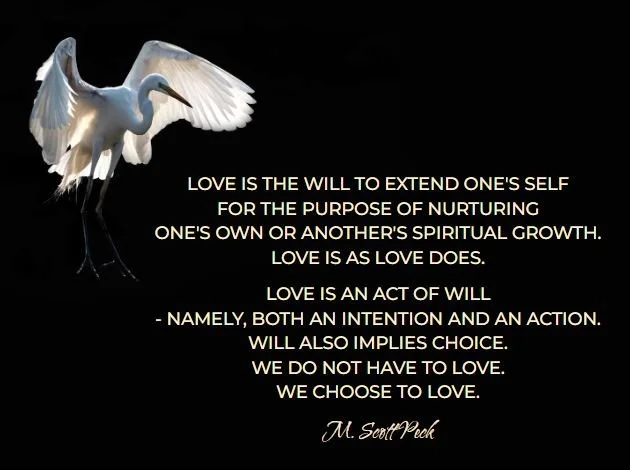
Readings
THE FIRST READING is from the work of A. Powell Davies, who lived from 1902 until 1957. He was a minister with a liberal stance on theology, and a strong social activist. He stressed government accountability, objected strongly to McCarthyism, and promoted civil rights and liberties, particularly for African-Americans and women.
He wrote this on the need for a better sense of our relatedness:
“The years of all of us are short, our lives precarious. Our days and nights go hurrying on and there is scarcely time to do the little that we might. Yet we find time for bitterness, for petty treason and evasion.
What can we do to stretch our hearts enough to lose their littleness! Here we are—all of us—all upon this planet, bound together in a common destiny, living our lives between the briefness of the daylight and the dark.
Kindred in this, each lighted by the same precarious, flickering flame of life, how does it happen that we are not kindred in all things else? How strange and foolish are these walls of separation that divide us!”
THE SECOND READING is from a letter by Benjamin Franklin, who was born in 1706, and worked as a candle and soap maker, a writer, humourist, philosopher, political theorist, scientist, inventor, printer, foreign diplomat, civic activist, revolutionary leader, and a polymath. History has not recorded many details about this certain incident in his life, but we know that he received a letter thanking him for a kindness he had done in the recent past.
This was his reply:
“As to the kindness you mention, I wish I could have been of more service to you than I have been…the only thanks that I should desire are that you would always be ready to service any other person that may need your assistance, and so let good offices go around, for mankind are all of a family. As for my own part, when I am employed in
serving others I do not look upon myself as conferring favors, but paying debts.”
THE THIRD READING is from the work of Carter Heyward, an Episcopal priest, professor, activist, teacher, lesbian feminist theologian, author, and an equestrian instructor. Emphasizing “our power involved in mutual relating” she offers creative responses to violence and war. In her book The Seven Deadly Sins of White Christian Nationalism: A Call to Action, she identifies the 7 sins as the root causes of injustice and counters them with 7 loving values: empowering one another, humility, affirming diversity, justice-centered government, breaking the spiral of violence, and promoting a sense of belonging with all living things.
She wrote the following:
“Love is the choice to experience life as a member of the human family, a partner in the dance of life. Love is a conversion to humanity - a willingness to participate with others in the healing of a broken world and broken lives.”